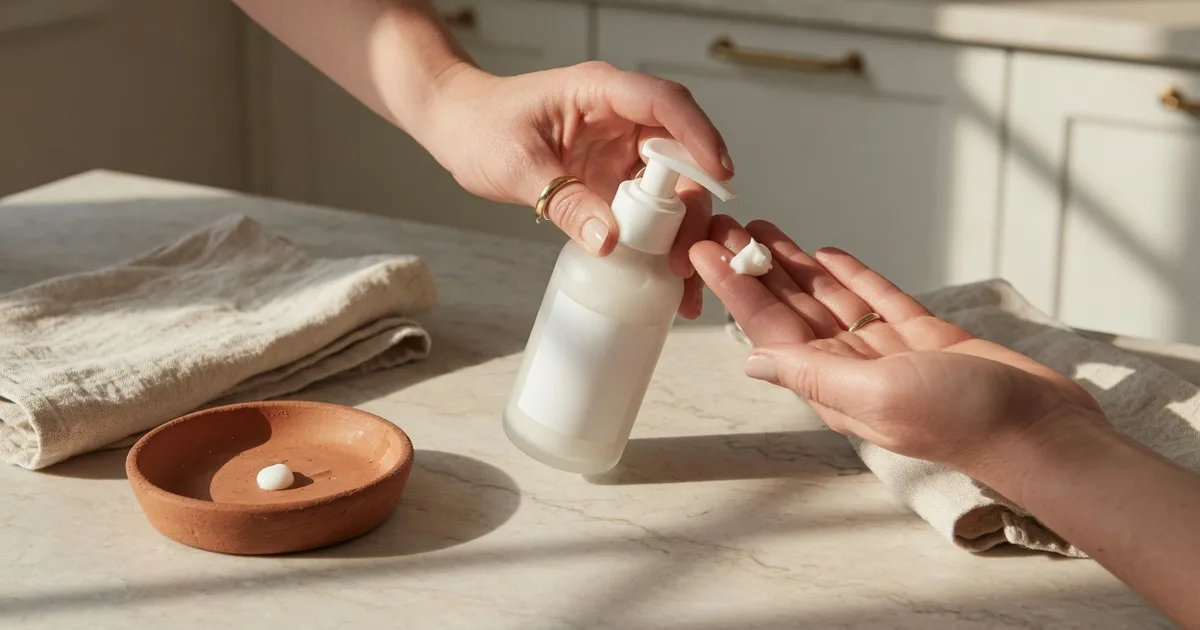
A practical method for briefing UGC testimonial videos that sound like a real Saudi customer, not a scripted ad, plus talking points and a shot list to send with the order.
A UGC testimonial is not a feature list delivered to camera. It is a short, specific opinion from someone who used the product in a real Saudi home or routine: why they bought it, what they noticed after using it, and who they would tell to buy it.
If the video sounds like a catalogue, shoppers treat it like an ad and scroll. The fix is not a longer script. It is a tighter brief: one buying situation, two concrete details, one honest limit, and permission for the creator to talk the way they actually talk.
User-generated-style product video (UGC) fits this job because you are buying a ready-to-publish clip, not an influencer post. The creator does not need a large following. They need to hold the product and sound like a customer.
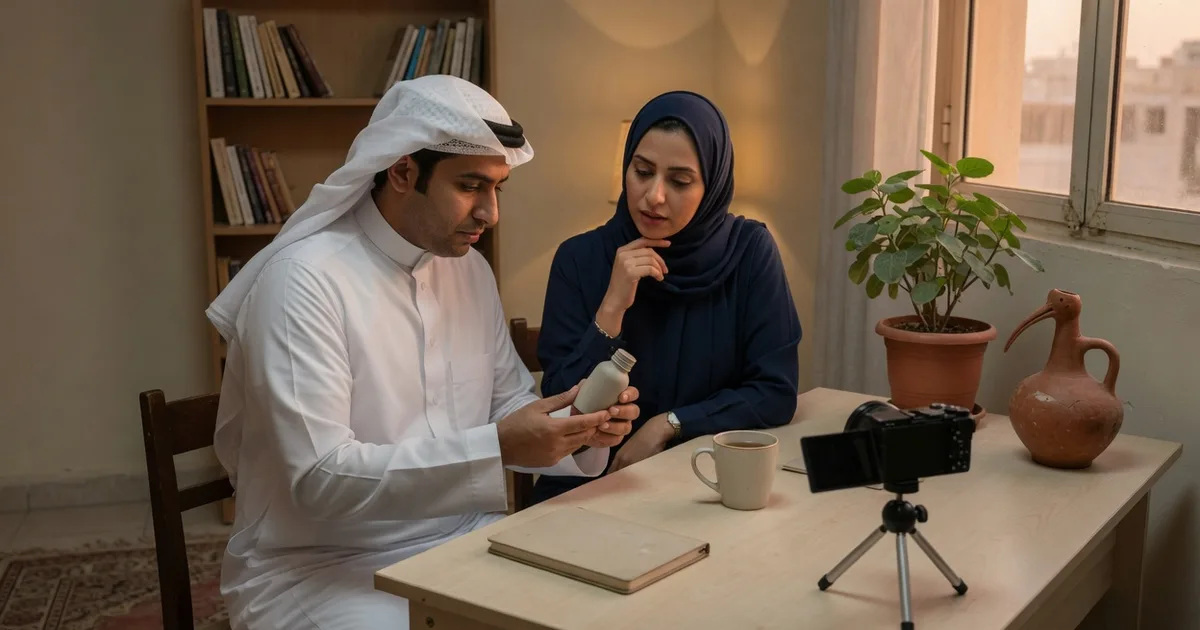
What a natural UGC testimonial should say
A usable testimonial for a Saudi product video usually hits five beats. Keep the whole clip short enough for Reels, TikTok, or Snapchat. Do not force every beat if one of them is weak.
- Who is talking, in one line. Not a biography. "I work from home in Riyadh and I bought this for afternoon coffee" is enough.
- The situation that made them buy. Late-delivery anxiety is not the point. "I needed a gift for my sister's new apartment" or "my old cable kept slipping out of the phone" is the point.
- One specific thing they noticed in use: texture, weight, smell, whether it lasted a workday, whether it fit a small kitchen. Vague praise such as "the quality is amazing" does no work.
- One honest limit. "The scent is strong for the first hour" or "it is better for two people than a big gathering" makes the rest believable.
- Who it is for, and who it is not for. Saudi shoppers use this line to self-select. "If you want a heavy winter abaya, skip this. If you want something light for an indoor majlis, this is the one I would reorder."
Write these as talking points, not as sentences the creator must recite.
Why most testimonial UGC sounds fake
The usual failure is a brief that says "mention these eight features and end with a discount code." The creator then lists waterproof, premium, and limited-time in the same breath.
Other patterns that break trust:
- Opening with the brand name before the situation
- Using formal advertising Arabic or English the creator would never say to a friend
- Showing the product only as a still life while the person talks
- Claiming a result the creator could not have observed in a short usage window
- Copying English testimonial structures ("I was skeptical at first, but...") that do not match how people actually recommend products in Saudi chats
You do not need a large following for this to work. You need a creator who can use the product on camera and talk like a customer. That is different from hiring an influencer to post to their audience.
Talking-points brief you can send with the order
Paste this into the order. Replace the brackets. Keep it to one page. You are not running a brief round-trip; you are giving the creator what they need on the first shoot.
Product: [name, variant, size]
Who the shopper is: [a father buying a vacuum for a villa / a woman buying a serum for dry indoor AC skin]
Usage window for this video: [first evening using it / three days of commuting]
Must show on camera: [open the box / apply / plug in / wear / pour]
Talking points, not lines to read:
- I bought this because [situation]
- What I noticed first: [detail 1]
- After using it: [detail 2]
- I would tell [type of person] to get this
- I would not recommend it if [limit]
Words to avoid: premium, revolutionary, guaranteed, number one, you have to buy this
Language: [spoken Saudi Arabic / English / light mix]. If Arabic, ask for natural spoken Arabic, not formal copy.
On-screen text: [none / product name only / the one specific notice as a short caption]
Do not claim: [anything the creator cannot see, measure, or honestly feel during the shoot]
If you already know the objections that delay purchase, send two of them as optional points, not as a speech. For a fuller method of turning those delays into video lines, see How to Turn Customer Objections into UGC Videos in Saudi Arabia.
Shot list: a testimonial still has to show the product
A talking head with a box in the corner is a weak product video. Pair every spoken beat with a shot that proves it.
Film in this order so the product does not disappear behind the talk:
- Hands picking up the product from a real surface: kitchen counter, desk, car seat, bathroom shelf.
- The creator in frame, product in hand, stating who they are and why they bought it.
- A tight demo of the one specific notice: texture rub, zipper, weight in the palm, steam, light through a lens.
- The product in the place it will live: beside the coffee machine, on the majlis side table, in the gym bag.
- A closing shot of the creator putting it down and saying who it is for.
If the creator will not appear on camera, keep the same order with hands and voiceover. On-camera appearance is an extra service on PushBrands when you want the face in frame, and it is priced on the profile before you order. Faceless testimonials still work if the voice sounds like a person, not a radio ad.
Do not ask the creator to act surprised. A calm, specific recommendation outperforms a fake unboxing gasp.
If you are still deciding whether this should be your first video at all, compare it with unboxing and demo formats in Which UGC Video to Order First: Unboxing, Demo, or Testimonial.
Hypothetical example: an after-shower cream for AC-dry skin
This is a hypothetical example, not a customer result.
A Jeddah beauty store wants a testimonial for an after-shower cream sold to people whose skin dries out under indoor air conditioning. The brief tells the creator: you live in an apartment, the AC runs all day, you tried the cream after wudu and before bed, it absorbed fast and did not leave a shine on the pillow, you would tell an office worker with a tight, dry face after work to buy it, and you would not tell someone with very oily summer skin to start here.
The video is 22 seconds. On-screen text is only the product name. The creator never says "best quality" or the store name until the last line, if at all. The shopper learns who it is for. That is the job of a testimonial.
What to check before you accept the video
Watch it once with sound, once with sound off.
- Does the first sentence state a situation, not a slogan?
- Is there at least one detail you could only know by using the product?
- Does the product occupy the frame during the proof shot, not only during the intro?
- Would this message look normal if someone forwarded it in a family WhatsApp group?
- Did the creator invent a result you did not approve: skin "transformed," "sales doubled," a medical claim? If yes, request a recut of that line before you accept.
On PushBrands an order moves from in progress, to delivered, to accepted. The brand's payment is held until you accept the delivered video, so this review is part of the order, not an awkward extra negotiation.
Trade-offs to decide before the shoot
On-camera versus voice-only. A face builds a person. Hands plus voice is easier for a more modest presentation and faster to film. Choose based on the product and your brand, not based on what ads look like in other markets.
Arabic versus English. If the buyer is a Saudi household shopping for a home product or a gift, spoken Saudi Arabic usually fits. If the product is sold to a mixed expat audience, English can be the right testimonial. Do not mix both in a way that makes the creator translate themselves in real time.
One tight opinion versus covering every SKU. One variant, one user, one limit. If you have five colours, order five short testimonials later rather than one video that lists them.
Additional talent. If the opinion is shared between two people, such as a couple receiving a gift or a short majlis reaction, the extra service for more than one person in the video is priced separately and shown before you order.
Next steps
- Pick one product and one shopper situation, not your whole catalogue.
- Fill the talking-points brief above. Cut it until a creator can film it in one sitting.
- Decide whether you need on-camera appearance, an extra hook, or a Snapchat or TikTok post as a separate service.
- Order the video, review it against the checklist, and only then reuse the same talking points with a second creator if you want another face and another room.
PushBrands is a Saudi UGC marketplace where you browse KSA-based creators, see verified platform metrics next to previous work, and buy a ready-to-publish vertical video at the fixed price the creator sets. Extra services such as on-camera appearance are shown before you order. UGC services on PushBrands start from SAR 150.
Questions the brief above does not cover
Can a creator give a testimonial if they only used the product on shoot day?
Yes, if you brief an honest usage window. Ask for first impressions you can see on camera: fit, smell, weight, setup. Do not ask for 30-day results they did not live.
Should the creator mention the price?
Only if you asked for it and the number is current. Price talk dates the video. "Worth it as a gift" is safer than reading the tag.
Do I need the creator to post the testimonial on their account?
Not if you will run it on your own product page, WhatsApp, Reels, or ads. Posting to Instagram, TikTok, or Snapchat is a separate extra service if you want their post as well. The video itself does not require a large following.
Should I add extra voiceover on top of an on-camera testimonial?
Rarely in the same shot. Choose a face that talks, or hands with a voice. Additional voiceover helps when the video is faceless and you want a cleaner vocal layer, and that service is priced separately before you order.
- ugc testimonials
- saudi brands
- product videos
- social proof
- creator brief