Beauty Product UGC: Filming Texture, Shade Match and Routine
A filming and briefing plan for Saudi beauty stores: texture, shade, and routine shots that help shoppers judge skincare and makeup before they buy.
Beauty UGC fails when it looks like a TV commercial. A shopper in Riyadh or Jeddah needs to see how a serum sits on skin, whether a foundation shade turns grey in indoor light, and how a routine fits a real morning — not a ring light and a filter that erases texture. If you create UGC videos for beauty products around three jobs only (texture, shade, routine), the file can work on TikTok, Instagram Reels, Snapchat, and your product page without a celebrity or a large following.
This is a filming and briefing plan for Saudi beauty, skincare, and makeup stores. It is not a general UGC explainer. User-generated-style content here means a ready-to-publish vertical video from a creator, not an influencer campaign.
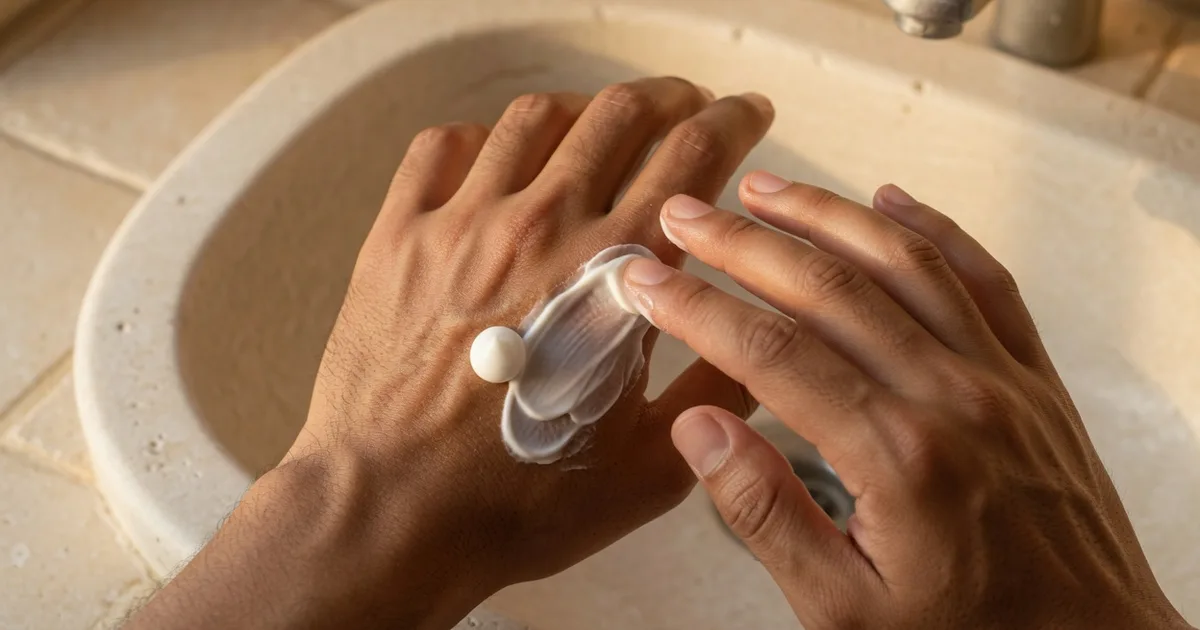
What Saudi beauty shoppers need to see before they add to cart
A fashion try-on answers “does this look good on a body.” Beauty UGC answers different questions:
- What does it feel like? Thick cream, watery serum, sticky sunscreen.
- What colour is it on skin, not in the tube?
- How messy is the application?
- What does a normal amount look like — one pump or a grain of rice?
- Where does it sit in a real routine: after wudu, before makeup, on gym-damp hair?
Saudi indoor light is often warm and mixed: ceiling spots plus a window. If your only reference is a ring-light close-up, the shade will look different in a Riyadh apartment at 8pm. Ask the creator to film one shot in the light your customer actually uses the product in.
Do not ask the creator to promise results. No “in 7 days,” no “clears acne,” no medical language. The video should show the product, not diagnose skin. If you would not print the line on the box, do not put it in the creator’s mouth.
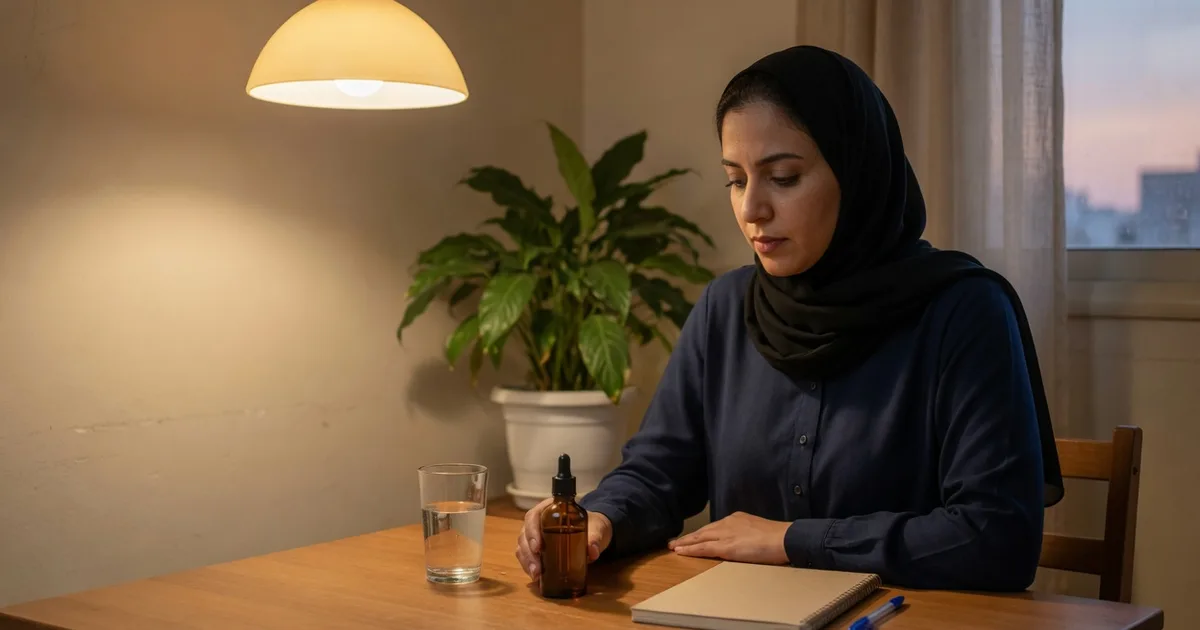
A shot list for skincare, makeup, and haircare
Send this with the order. Ask for 4–6 usable shots inside one vertical video, not a 20-shot commercial.
For skincare (serum, moisturiser, cleanser, sunscreen)
- Hands and pack, two seconds: the closed bottle on a bathroom shelf or vanity.
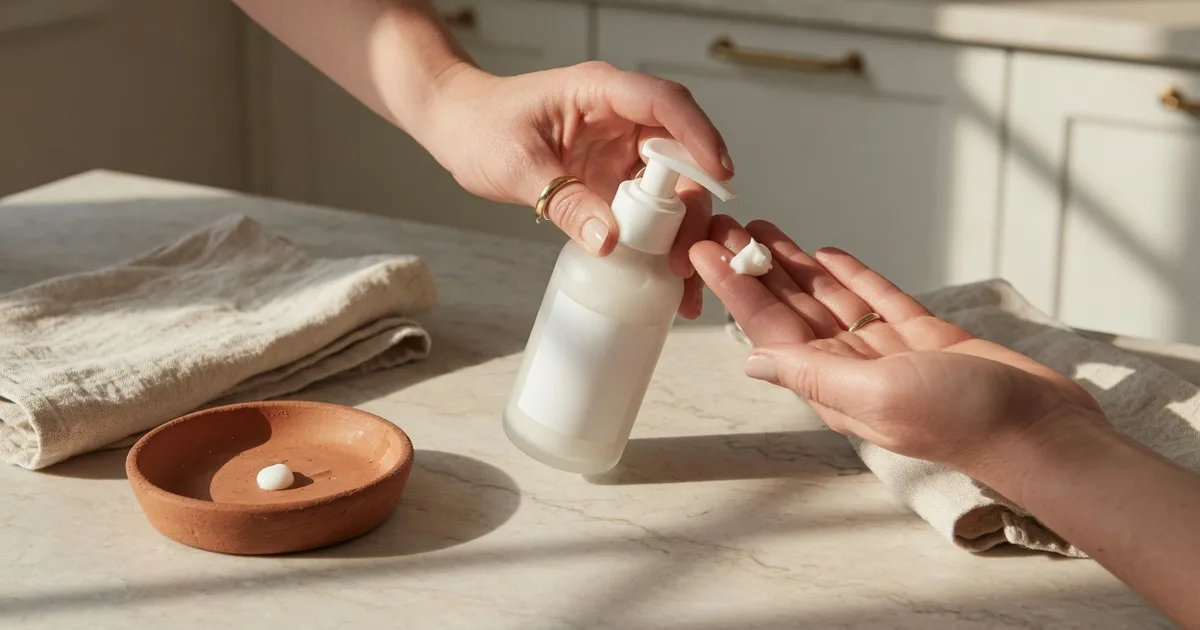
- Dispense: one pump or a pea-size on the back of the hand. This is the “how much do I use” shot.
- Texture spread: a slow smear showing sheen, pilling, or white cast.
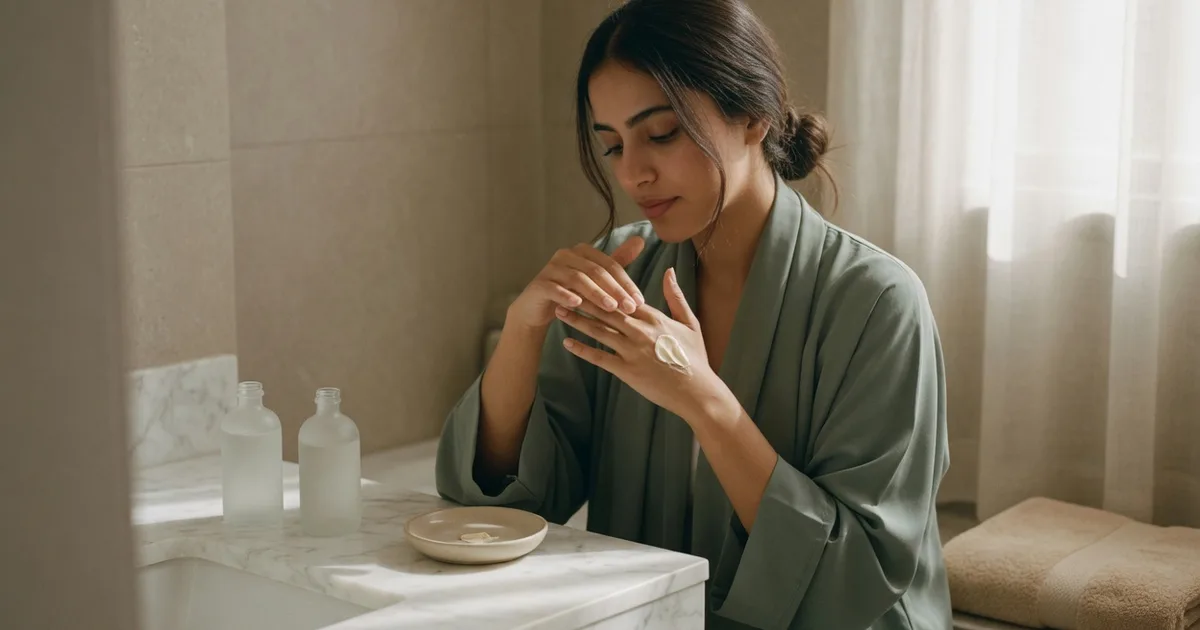
- Application on face or neck, modest framing: cheeks and jaw, or hands only if you want faceless UGC.
- After-feel, three seconds later, no heavy filter. Shine or matte, not a beauty-ad glow.
- Routine placement, said once and calmly: after cleanser, before sunscreen.
For makeup (foundation, concealer, lip, mascara, palette)
- Shade in the pan or bottle next to the creator’s skin, in indoor light.
- Swatch on the back of the hand, then on the jaw or lip. One surface lies; hand undertone is not face undertone.
- Application tool: fingers, sponge, or brush, so the shopper can copy it.
- Movement: talk or smile so foundation does not sit like a still photo.
- An honest limit when it is true: medium coverage, or it transfers on a cup. That line builds more trust than a flawless claim.
For haircare (oil, shampoo, leave-in)
- Amount in the palm.
- Application on mid-lengths, not a salon hair-flip if that is not how your customer lives.
- Hair in a realistic state: frizz, hijab-day flattening, gym hair. Pick one real state. Do not film only freshly blown-out hair if you sell a wash-day product.
Keep the video vertical. Lead with the most visual proof in the first two seconds — usually the texture smear or the shade on skin — then name the product and the situation.
If you are still choosing the format, start with a demo rather than a talking-head review. Which UGC Video to Order First: Unboxing, Demo, or Testimonial is the demo: it carries texture. A review with no smear does not.
How to brief a beauty UGC creator
Keep the brief to one page. Beauty videos stall when the brand sends a 40-line script and a banned-word list longer than the shot list.
Include:
- Product name, shade or variant, and what not to mix with it on camera (another brand’s moisturiser, a tool you do not sell).
- The one job of the video: texture, shade match, or routine. One job.
- On-camera or faceless. Makeup usually needs skin in frame. A cleanser can be hands-only.
- Language: Saudi Arabic for most local stores. English only if your product page and ads are already English-first.
- Setting: a real bathroom or bedroom vanity, not a studio sweep. Neutral towels. No other brand bottles in shot.
- Lighting: window plus room light, no beauty-filter preset.
- Claims they must not make.
- What “done” looks like: one vertical video, first two seconds show texture or shade, a short spoken line, no heavy captions covering the product.
You do not need a campaign or a bidding round. On PushBrands you filter creators by the Beauty category, open a profile with previous work, and order at the base price the creator set. Optional add-ons such as on-camera appearance, additional voiceover, an extra hook, or Spark Ads authorisation are priced separately and shown before you order.
UGC services on PushBrands start from SAR 150. That is a starting point, not a typical invoice. Creators set their own base prices.
Mistakes that waste a beauty UGC order
Wrong light for shade. Filming foundation only under a ring light. Add one shot in the room where the customer will actually check their face.
Over-directing the face. Asking a creator to “look like a model.” You wanted UGC because it does not look like your catalogue.
Medical or miracle claims. If it does not belong on the box, it does not belong in the brief.
Props that fight the product. A cluttered vanity full of other labels, a gold tray that makes a simple cream look like a hotel amenity, or a filter that erases texture — the thing you needed to show.
Buying extras you will not use. On-camera appearance helps foundation and lip. It is optional for a hand-only cleanser demo. Fast delivery helps only if you have a launch date. Read When to Add Extra Services to a UGC Order in Saudi Arabia before you tick every add-on.
One creator, one video, then pause. Beauty shades and skin types vary. A second creator with a different undertone is often more useful than a second extra on the first order. Treat that as a test, not a promise of better results.
Hypothetical first order for a Riyadh skincare store
This is a hypothetical example, not a PushBrands customer result.
You sell a vitamin C serum as the hero SKU. You order three vertical demos from three Beauty-category creators:
- Faceless texture demo, bathroom shelf, Arabic voiceover: pump, smear, after-sheen.
- On-camera routine, modest framing, indoor evening light: where the serum sits after cleanser.
- Social proof that still shows the smear: a creator who already uses similar serums, no “my dark spots vanished” line.
You skip Instagram, TikTok, and Snapchat posting extras until you have accepted the files and know which take you will run as an ad. You add Spark Ads authorisation only on the video you decide to boost. Payment stays held until you accept each delivery.
Next steps
- Pick one hero SKU and one job: texture, shade, or routine.
- Copy the matching shot list into your brief.
- Filter Beauty creators, watch two previous videos each, and order the first demo.
- Review the delivery against the shot list and the claims list before you accept.
- Only then decide on posting extras or a second creator with a different skin tone.
When you are ready to order, browse Beauty creators on PushBrands, compare previous work on each profile, and buy a vertical video at the creator’s fixed price.
FAQ
Can the creator stay off-camera for makeup? Hands and a jaw swatch can work for a lip oil or a pan shot. Foundation usually needs a face in motion. Choose on-camera appearance when the shade has to live on skin.
Should we film before-and-after? Only if you can do it honestly in one sitting (wet-to-dry, white-cast-to-rubbed-in). Multi-day “results” afters invite claims you may not want to stand behind. Skip them unless your own product communications already use that proof.
Arabic or English voiceover? Match the store. If checkout, packaging, and support are in Arabic, brief Saudi Arabic. Keep ingredient names in English if that is how your customers already search them (niacinamide, SPF).
Do we need motion graphics on the first order? Rarely for a first beauty demo. A texture smear is the graphic. Add motion graphics later if you need a shade name on screen for a paid ad.